
Learning study / Synthetic data
Kestrel EHR
A primary-care workspace for reviewing patient history and responding to medication alerts.
View live demo- Role
- End-to-End Product Design
- Scope
- UX/UI, Design Systems & Development
- Focus
- Clinical Workflows & Medication Safety
- Approach
- AI-Assisted Design & Development
- Tools
- Figma, Codex, Next.js, Supabase
Project overview
A primary-care design study.
I designed the patient chart and e-prescribing workflow for a self-initiated US primary-care prototype using synthetic records and fictional medication rules.
Problem & solution
Keep the patient in view.
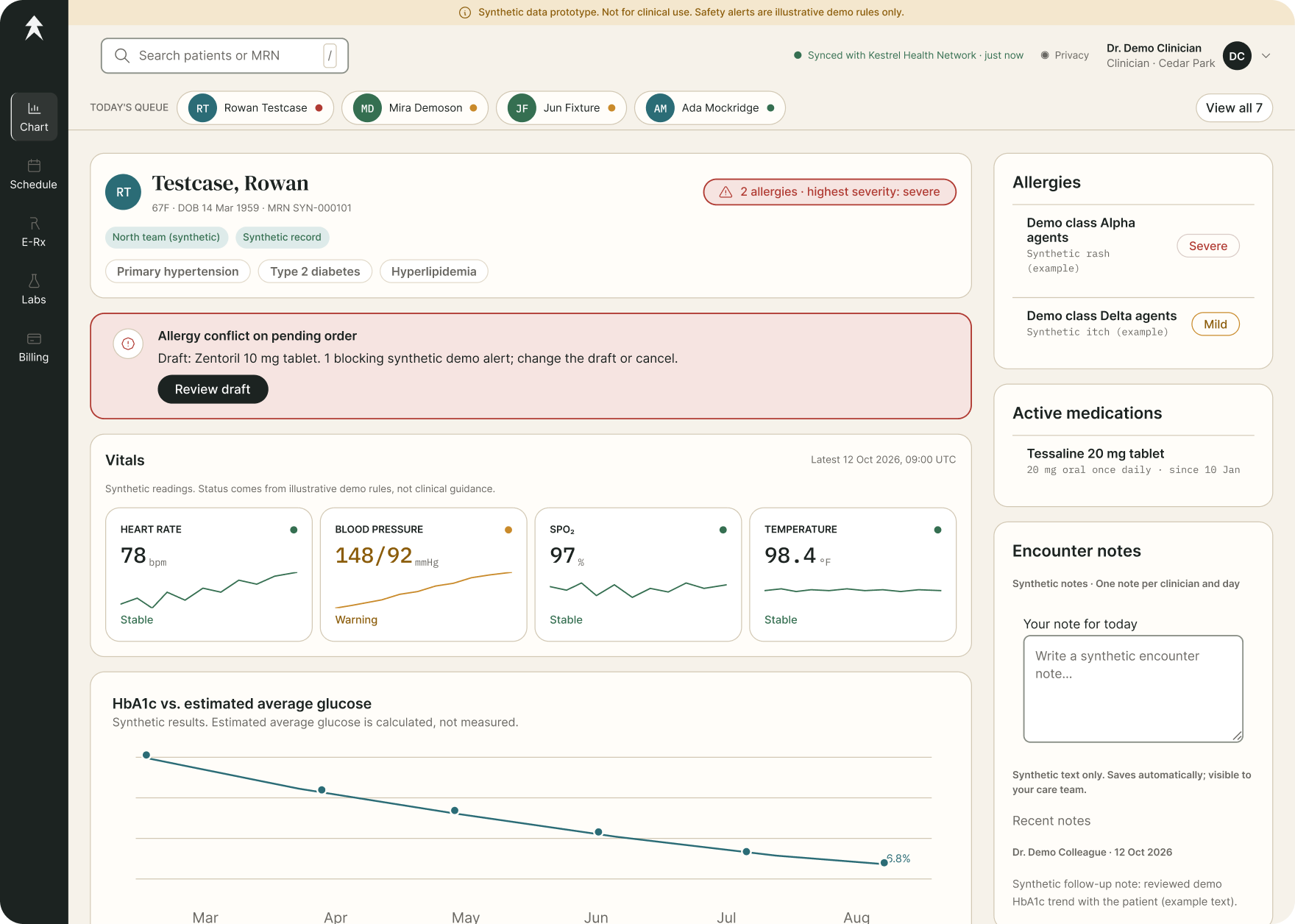
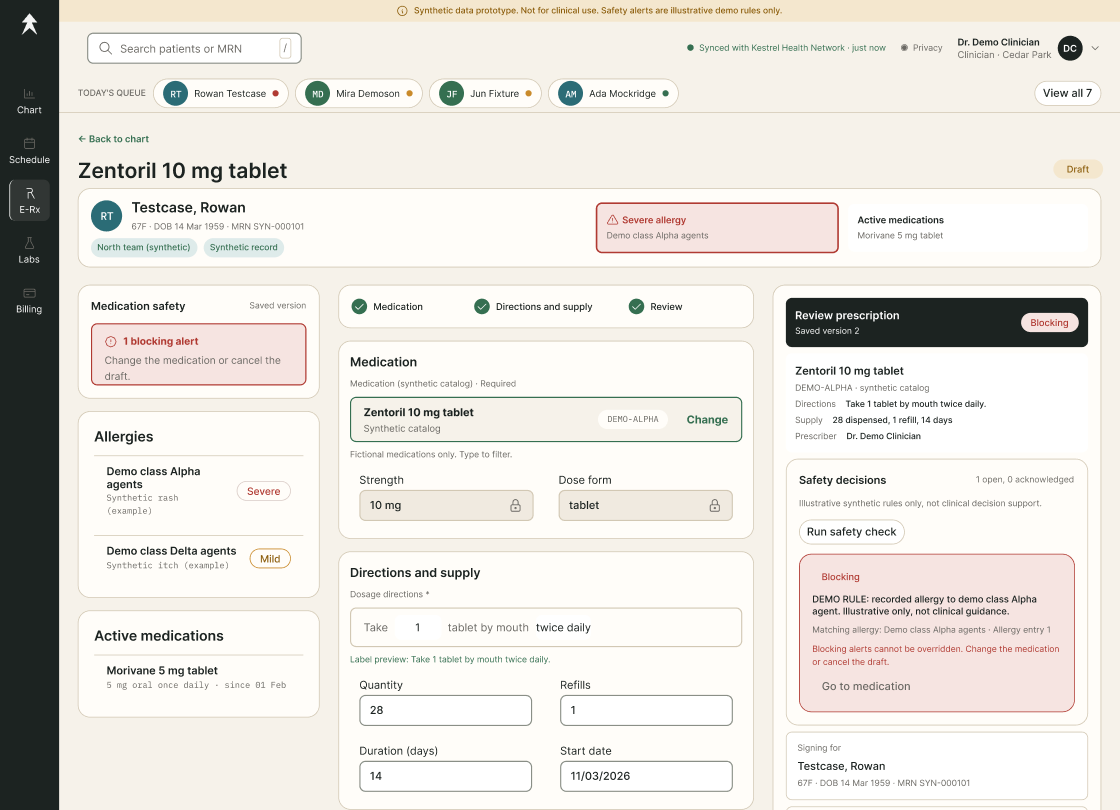
I explored a modal, a badge, and an in-context alert panel. I chose the panel to keep the prescription, the reason for the alert, and the next action visible together.
Design process
Structure before styling.
I mapped a proposed encounter from patient selection through documentation, then laid out the medication safety decision step by step.
Proposed encounter flow
- Select patient
Entry via active queue
- Review context
Vitals, allergies, history
- Notice demo alert
Fictional rule signal
- Review / respond
Inspect or revise order
- Document
Keep notes in context
Medication review flow
- Order
Prescribing intent
- Check
Fictional DEMO-* rules
- Conflict?
Blocking or advisory status
- Resolve
- Blocking
- Change or cancel
- Advisory
- Acknowledge
Wireframes
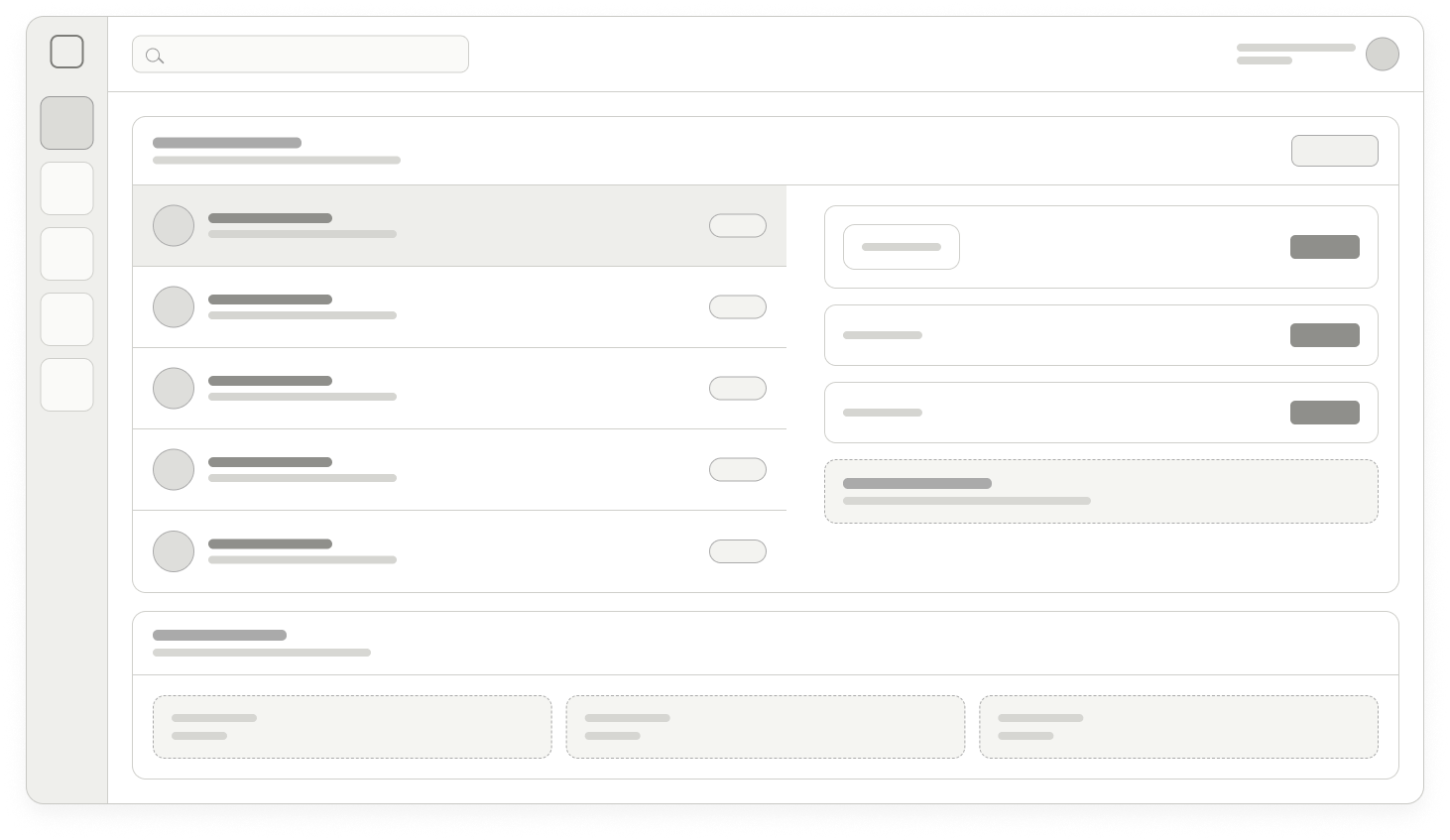
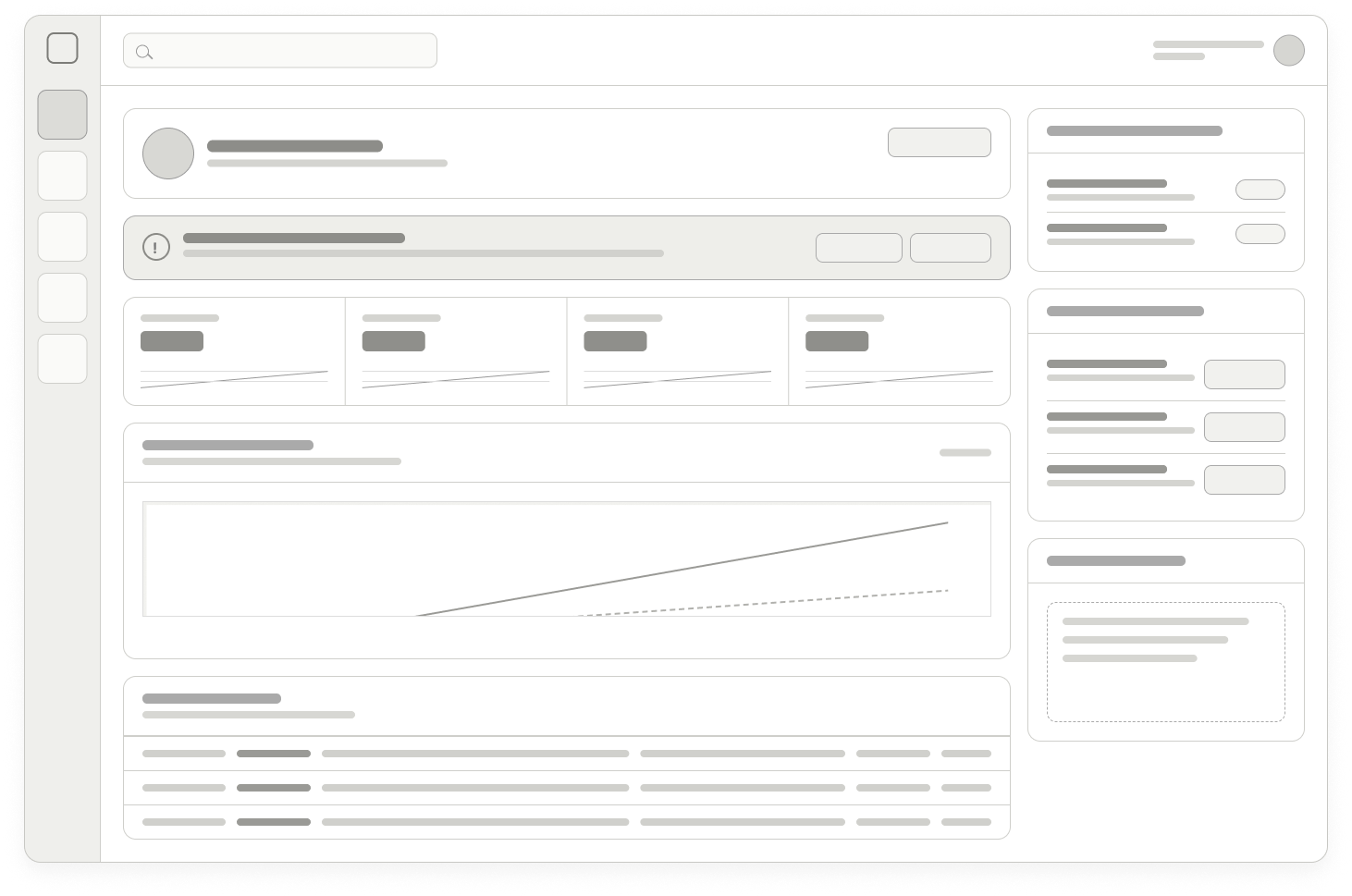
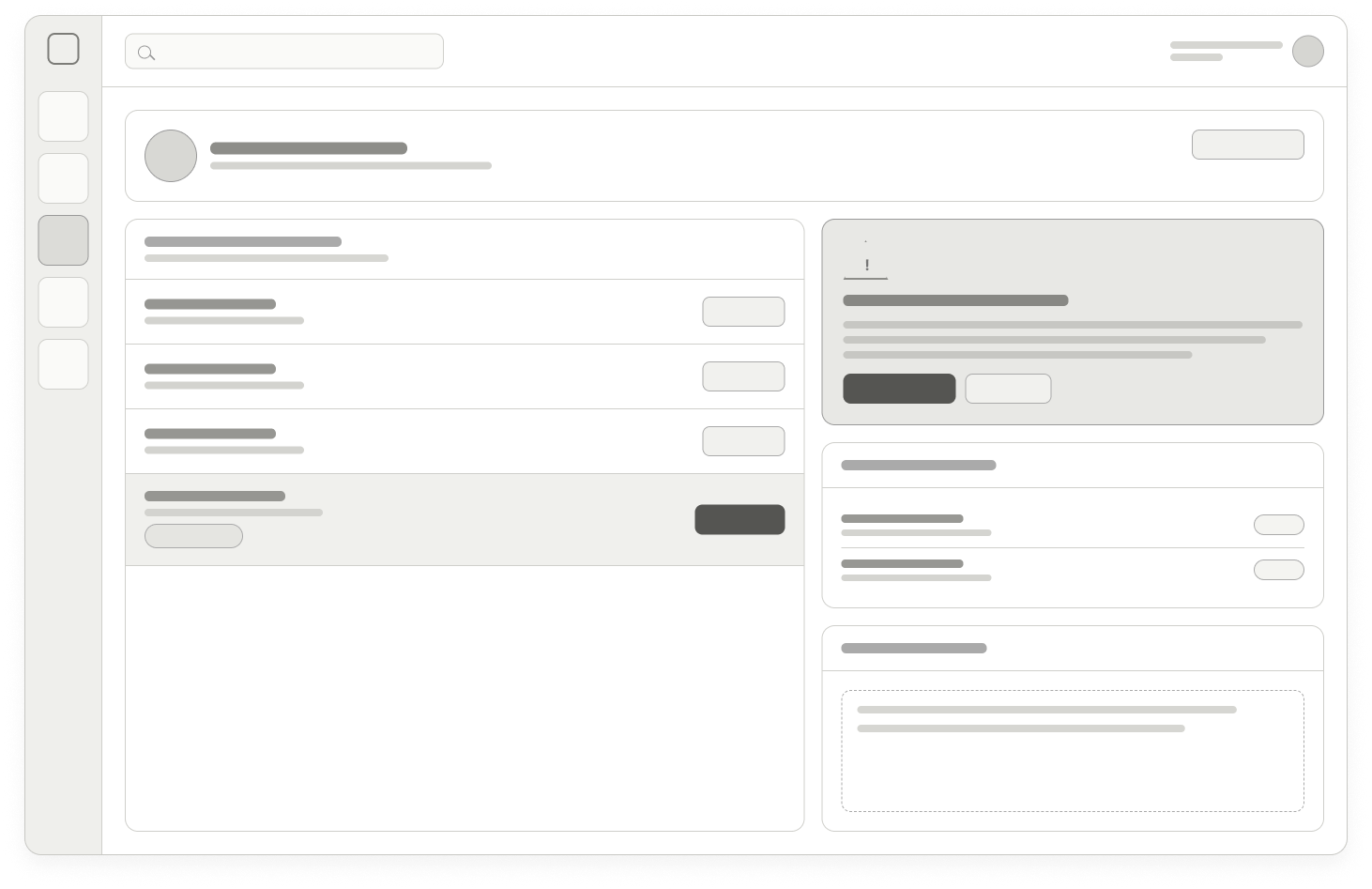
Three low-fidelity studies explore patient selection, chart layout, and the medication decision.
Design system
A visual language for severity.
Semantic color and typography give the chart and prescribing screens a consistent hierarchy. Alerts communicate urgency with words and icons alongside color.
Semantic color roles / Light mode
- Ink / contrast
bg/inverse#1C2321 - Brand / subtle
primary/subtle#DEEBEA - Critical / risk
status/critical#B03A32 - Warning / caution
status/warning#C98A2A - Stable / normal
status/stable#356F51 - Surface / content
bg/surface#FFFDF9
Inter / UI & component labels
A repeatable hierarchy for dense information.
Predictable labels, controlled density, and clear reading order.
30 px · 39 px line height · Weight 600
IBM Plex Mono / Clinical values
MRN SYN-000101 148/92
Monospaced styling is reserved for identifiers, timestamps, codes, and comparable values.
24 px · 38 px line height · Weight 400
Final design
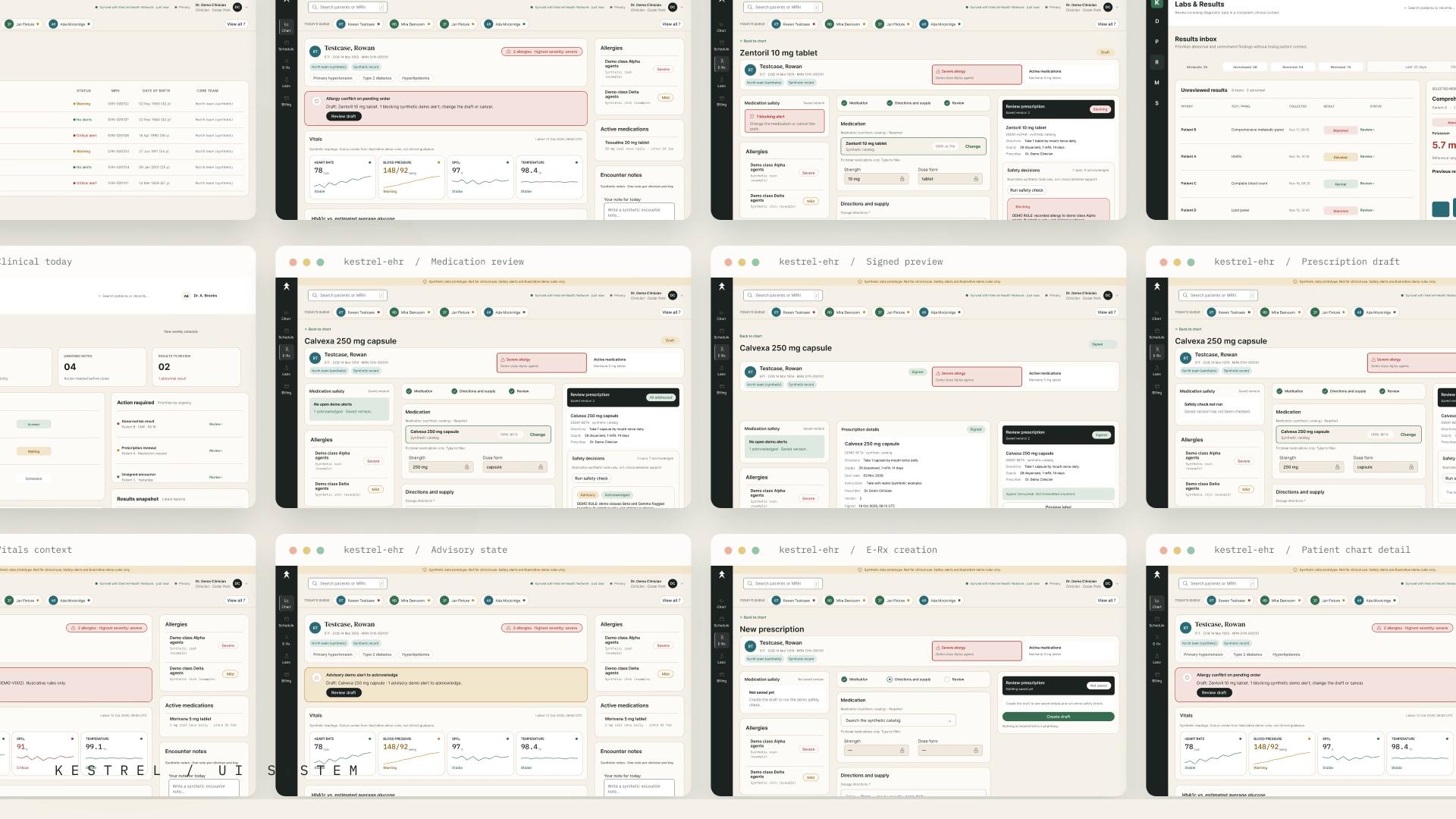
The prototype connects patient selection and chart review to a simulated prescribing decision.
Reflection
What I’d validate next.
The prototype has yet to be tested with clinicians. I’d start by checking whether they can distinguish an advisory from a blocker and identify the next action.